

The end of a construction project should feel like a victory lap, not a frantic scramble through a mountain of paperwork. But for too many contractors, that's exactly what it becomes: a last-minute chaos of hunting for RFP clauses and chasing down subcontractors for compliance. This isn't just an administrative headache; it's a direct threat to your final payment and your client relationships.
Escaping the Chaos of Project Closeout
For preconstruction teams, the final push to completion often triggers a familiar, high-stakes panic. You're trying to wrap things up, but you're bogged down by an administrative mess that puts final payments, your client relationship, and even your reputation on the line. This chaos is the direct result of three core problems that start long before the project is even won:
- RFP Overload: Your team wastes dozens of hours sifting through 100+ page contracts and spec books, trying to find every little clause that dictates a final deliverable.
- Clause Hunting: Just figuring out the specific warranty requirements, training obligations, or as-built drawing formats turns into a scavenger hunt when deadlines are breathing down your neck.
- Safety Compliance Burden: Getting all the Job Hazard Analyses (JHAs) from every subcontractor, then verifying and organizing them, creates a massive bottleneck that can hold up the entire handover.
Shifting from Reactive to Proactive
The only way to escape this cycle is to front-load the administrative work. A proactive strategy means identifying every single closeout requirement during the bid stage, not weeks before the ribbon-cutting. This simple shift in workflow completely changes the outcome.
Imagine saving an average of 23.5 hours of your preconstruction team's time on every single project. That’s the real-world impact of moving away from manual document review and automating the process of pulling requirements from dense RFP documents.
The Impact of a Structured Handover
When you tackle the document burden early, the benefits are tangible and hit your bottom line directly. The goal is to walk into the final phase with a complete, audit-ready package that required minimal last-minute effort. Think about having every cited clause extracted with over 95%+ coverage, giving you confidence that no contractual obligation has slipped through the cracks.
Ultimately, a well-managed approach to construction closeout documents gives you a clear and powerful set of outputs:
- A comprehensive submittal register, delivered in as little as 72 hours, ready for your team to execute.
- Pre-compiled Job Hazard Analyses (JHAs) from all trades, already mapped to the relevant safety standards.
- A complete list of cited deliverables, ready for final verification.
This isn't about working harder; it's about a smarter workflow. You eliminate the frantic paper chase and replace it with a reliable system that helps you get paid faster, keep your clients happy, and move on to the next job with confidence.
The Anatomy of an Audit-Ready Closeout Package
A bulletproof closeout package is your ticket to getting paid on time and landing your next job with that client. Too often, though, contractors treat this final deliverable like a frantic scavenger hunt, chasing down documents that should have been collected months ago. This last-minute chaos doesn't just delay final payment—it completely erodes the client’s trust.
An audit-ready package is more than just a thick binder of papers. It’s a meticulously organized, legally sound collection of evidence that proves you fulfilled every single contractual obligation. It leaves no room for questions, disputes, or payment hold-ups.
Core Components of a Closeout Package
Think of a complete closeout package as having three main pillars: technical documentation, financial and legal records, and operational handover materials. Each one serves a critical purpose, from proving compliance with building codes to empowering the owner's facility management team for decades to come. If you miss a single piece, it can create a real domino effect of problems down the line.
For example, a missing warranty for an HVAC unit might seem like a small oversight. But when that unit fails six months after handover, you can bet the owner is calling you first. A well-organized package prevents these long-term headaches and protects your hard-earned reputation.
Here's a look at the essential documents you’ll need to assemble.
Essential Construction Closeout Document Checklist
A truly comprehensive closeout package is built from dozens of individual documents, each serving a specific purpose. The table below breaks down the must-haves, categorizing them to help you build a complete and organized deliverable for the project owner.
Document Category | Specific Documents | Purpose and Importance |
Technical & As-Built | As-Built Drawings, Specifications, Product Data Sheets | Provides the final "record of construction," showing exactly what was built and with what materials. Crucial for future maintenance, renovations, and facility management. |
Operational Handover | Operation & Maintenance (O&M) Manuals, Training Records & Videos | Equips the owner’s team to operate the building's systems efficiently and safely. Lack of these documents often leads to equipment misuse and premature failure. |
Warranties & Guarantees | Manufacturer Warranties, Subcontractor Guarantees, Supplier Warranties | Transfers responsibility for equipment and systems to the manufacturers and installers. Protects both the owner and the GC from future repair costs. |
Financial Closeout | Final Payment Application, All Approved Change Orders, Final Lien Waivers | Officially closes the project's books. The final payment application reconciles the contract value, while lien waivers are non-negotiable for releasing final payment. |
Legal & Compliance | Certificate of Substantial Completion, Certificate of Occupancy, Inspection Reports, Consent of Surety | Provides legal proof that the project is complete, compliant with codes, and ready for use. The Consent of Surety is vital for releasing the performance bond. |
Getting every one of these documents signed, sealed, and delivered is what separates a smooth, profitable finish from a chaotic and costly one.
Financial and Legal Documentation
This is where so many projects get stuck. Incomplete or incorrect financial paperwork is probably the single most common reason for delayed final payments. Every document in this category is designed to legally and financially close the books on the project, protecting everyone involved from future claims.
A single missing lien waiver from a small subcontractor can halt the entire payment process for everyone. The owner needs absolute certainty that no one can slap a lien on their new property months after you've left the site. These legal declarations are fundamental to final acceptance; to dig deeper, you can learn more about the role of affidavits in legally finalizing project commitments.
Your financial and legal documents must be absolutely airtight. Key items include:
- Final Lien Waivers: These are signed releases from every subcontractor and major supplier. They confirm everyone has been paid in full and legally waive their right to place a lien on the property.
- Consent of Surety: This is a formal document from your surety company, confirming the project is complete and allowing the performance and payment bond to be closed out.
- Final Payment Application: This isn't just another invoice. It's the final accounting of the entire contract, detailing the original amount plus all approved change orders.
The Real-World Impact of Incomplete Documents
The consequences of a sloppy closeout are severe and expensive. A typical closeout package contains 20-50 key items, from O&M manuals to warranties that can span 1-10 years. It also includes the critical redline drawings that capture changes made on-site—which happens on a staggering 35% of projects.
In the US, where 78% of E&C firms report facing heightened project risks, a messy closeout can easily delay final payment by 60-90 days. That’s not an inconvenience; it's a direct hit to your cash flow, tying up capital that you need for payroll, materials, and your next project.
Building an audit-ready package isn't just administrative busywork. It’s a core business function that protects your bottom line and sets the stage for future work with happy, satisfied clients.
Weaving Your Closeout Workflow into the Project Fabric from Day One
The secret to a smooth, stress-free closeout isn't a mad dash at the finish line; it’s a disciplined process that starts the moment you lay eyes on the Request for Proposal (RFP). Waiting until the final weeks to chase down construction closeout documents is a surefire way to hit delays, spark disputes, and ultimately, get paid late. A truly audit-ready workflow begins before the first shovel ever breaks ground.
This proactive mindset is the antidote to the biggest closeout headaches. Instead of frantically hunting for clauses in the final phase, you’re identifying every single deliverable right from the start. What used to be a chaotic scramble for compliance documents becomes a predictable, manageable process that unfolds naturally alongside the project itself.
Embed Closeout into Your Bid Process
The best closeout strategies are baked right into preconstruction. When your team first digs into a tender, they're sitting on a goldmine of information that will dictate the entire closeout package. The classic mistake is treating this as a simple compliance check, not as the foundational plan for all project documentation.
You gain a massive advantage by pulling out every single closeout-related clause from the specs and contract documents before you even submit a price. This front-loading effort means you aren't just bidding on the steel and concrete; you're bidding on a complete, deliverable project—paperwork and all.
Services that can pull these cited clauses with over 95%+ coverage in as little as 72 hours are invaluable here. This isn't about fancy tech; it's about a tangible output that can save your estimators an average of 23.5 hours of tedious manual review. That’s time they can spend building a more competitive and accurate bid.
Turn the Submittal Register into a Living Document
Too often, the submittal register is a static spreadsheet—created once and only touched when a deadline is missed. That’s a huge missed opportunity. Your submittal register should be a dynamic, living document that acts as the central nervous system for your entire closeout process.
It needs to track more than just technical submittals. Every single closeout deliverable belongs here, including:
- Warranties: List each one, the responsible sub, and the required duration.
- O&M Manuals: Specify the format (digital or physical) and the exact equipment they need to cover.
- As-Built Drawings: Note the required format (like AutoCAD or PDF) and when they're due relative to project milestones.
- Training Sessions: Schedule client training and assign it to the right trade partner.
This approach gives you a real-time dashboard of your closeout health. You can see at a glance who's on track and who's falling behind, letting you step in early instead of fighting fires later. It transforms a simple tracker into a powerful tool for management and accountability. To see how this level of detailed, upfront analysis can fit into your budget, you can find straightforward details on NextBid’s pricing models for both individual projects and ongoing needs.
Define Ownership and Accountability in Your Contracts
Surprises are the enemy of a smooth closeout. The best way to kill them? Embed crystal-clear closeout requirements directly into your subcontractor agreements. This ensures every trade partner understands their specific documentation duties from the moment they sign on the dotted line, long before they ever step foot on site.
Don't just rely on a generic clause. Get explicit. Your contracts need to spell out:
- The exact documents required from that specific sub.
- The required format for each document.
- The deadline for submission, tied directly to their payment schedule.
This simple but critical step creates a clear chain of ownership. The project manager knows exactly who is chasing the HVAC warranties. The site super knows who provides the final inspection reports. The architect is clear on their role in approving as-builts.
The process flow below shows how these different document streams—drawings, manuals, and legal paperwork—all merge to form a complete, audit-ready package.
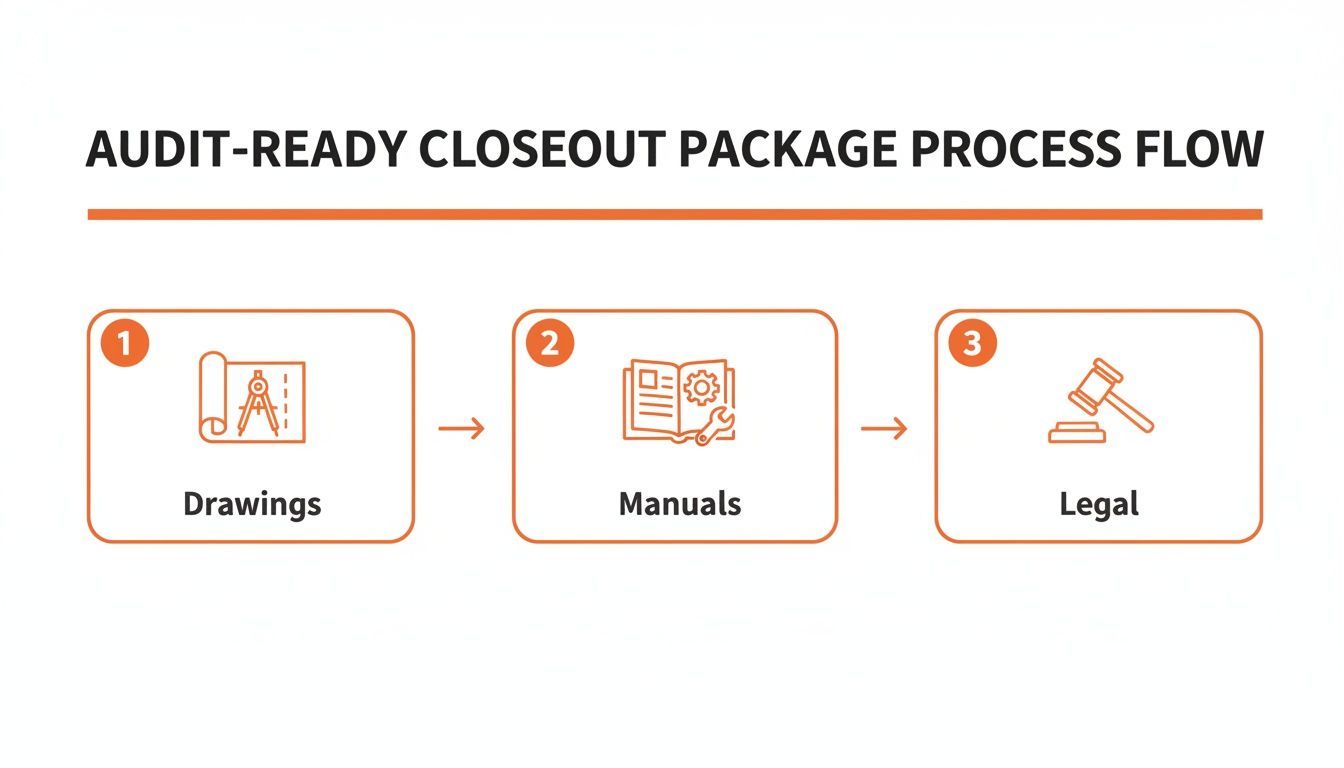
As you can see, the technical, operational, and legal documents have to be managed in parallel throughout the job—not just collected in a panic at the end. When you build your workflow from day one, every document has a clear path and a designated owner, making it nearly impossible for anything to fall through the cracks.
Sidestepping the Pitfalls That Can Derail Your Handover
Even the best-run projects can stumble right at the finish line. The handover phase has a nasty habit of exposing small oversights that can quickly blow up into major headaches, holding up final payment and souring client relationships. But these issues aren't just bad luck—they're predictable traps that spring from disorganized data and a lack of foresight.
More often than not, the seeds of a chaotic closeout are sown way back at the project's start. When preconstruction teams have to manually dig through dense RFPs to find handover requirements, critical details get missed. That initial scramble creates a domino effect, turning the final compilation of construction closeout documents into a frantic scavenger hunt instead of a routine task.
The Pain of Scattered Project Data
One of the biggest culprits is data fragmentation. This is what happens when crucial project information—think RFI answers, change order approvals, or product data sheets—lives in a dozen different email inboxes, disconnected spreadsheets, and random cloud folders. When it’s time to pull everything together for the closeout package, nobody can put their hands on the final, authoritative version of anything.
This digital mess is more than just an annoyance; it’s a direct threat to your project's success. It's shocking, but in the construction industry, as much as 30% of the initial data created during design and building is gone by the time the project closes out. This massive loss, as detailed in a ConstructEstimates article about the cost of bad data, creates huge inefficiencies and often leads to disputes.
The Last-Minute Scramble for Subcontractor Paperwork
Another classic mistake is waiting until the last few weeks to check on subcontractor compliance. You operate on the assumption that everyone has their warranties, as-builts, and lien waivers ready to go. Then, at the eleventh hour, you discover a key sub is missing half of their required documents.
Suddenly, you have a major bottleneck. The entire handover process grinds to a halt while you chase down one trade partner, holding up final payment for everyone. This is a direct result of not baking closeout requirements into the subcontractor agreements and payment schedules from day one.
Here’s how to get ahead of it:
- Link Payments to Paperwork: Don't just hold final retainage. Make the submission of specific closeout documents a requirement for processing progress payments throughout the project.
- Run Monthly Audits: A quick check-in on the status of each sub's closeout deliverables during your monthly project meetings can work wonders.
- Use Automated Reminders: Set up your project management software to automatically ping subs about upcoming documentation deadlines.
Inaccurate As-Builts: A Ticking Time Bomb
Finally, never underestimate the damage that inaccurate or incomplete as-built drawings can cause. These documents are the owner’s road map for operating and maintaining their new building. When they don’t reflect what was actually built, they become a source of future confusion, mistakes, and expensive rework for the owner’s team.
The problem usually starts in the field. Red-line markups from on-the-fly changes aren't consistently captured and transferred to the official record drawings. By the time the project is done, those small adjustments are forgotten, and the final as-builts are based on old information.
To guarantee your as-builts are rock-solid, build these checks into your process:
- Mandate Field Sign-Offs: Require your site superintendents to physically sign off on red-line drawings at key project milestones.
- Standardize Your Markup Process: Give your team a clear, simple instructions and a consistent format for how every single field change needs to be documented.
- Do a Final Walk-Through Review: Before you submit, walk the site with the as-builts in hand, along with your superintendent and the relevant trade foremen, to catch any final discrepancies.
Dodging these common pitfalls isn't about working harder at the end—it's about working smarter from the beginning. By building disciplined documentation workflows into your project from day one, you ensure the handover is a smooth, professional end to a job well done.
Leveraging Technology for a Faster Closeout
Let's be honest, paper-based closeouts are a nightmare. They're slow, frustrating, and prone to human error. The real headache, though, starts in preconstruction when your team is buried in dense RFP documents, trying to manually hunt down every single closeout deliverable. That "clause hunting" is a massive time sink that creates a ripple effect of delays, always ending in a chaotic handover.
The real value of modern tools is how they solve specific workflow problems. Instead of spending days sifting through hundreds of pages, specialized services now deliver outputs like cited extractions with over 95%+ accuracy in as little as 72 hours. This is a direct answer to the RFP overload that bogs down estimators and bid managers.
This workflow impact is significant: preconstruction teams save an average of 23.5 hours per project. That's time put back into building more competitive bids, not tedious administrative review. It’s about letting technology handle the most error-prone parts of the initial review so your experts can focus on high-value work.
From Manual Lists to Automated Registers
One of the biggest sources of friction in any closeout is creating and maintaining the submittal register. Traditionally, a project manager or coordinator has to piece this together by hand, and it's almost guaranteed they'll miss key items buried deep in the specs. Technology completely flips this on its head.
By analyzing the project documents right at the start, modern platforms can generate a complete submittal register for you. Every required warranty, O&M manual, and as-built drawing is on the list. The output is a structured, actionable plan your team can follow from day one, which means no more end-of-project scramble for forgotten paperwork.
Tackling the Safety Compliance Burden
The administrative weight of safety compliance is another area where technology makes a real difference. Think about the time spent compiling, verifying, and organizing Job Hazard Analyses (JHAs) from every single subcontractor. It's a huge task that can easily hold up the final handover.
Today’s solutions can automatically pull out all safety requirements and generate pre-populated JHA tables that are already mapped to standards like OSHA. This gives you a clear, auditable trail and ensures your safety documentation is comprehensive and compliant from the get-go. It turns safety paperwork from a reactive scramble into a proactive, managed process. And with every extraction securely cited, you can be confident your documentation is audit-ready. To see how this works in practice, you can learn more about how NextBid’s secure data handling aligns with industry standards.
The Financial and Strategic Impact of Digital Closeouts
The move to digital document management isn't just a trend—it's a massive industry shift. The global push for digital construction closeout documents is being fueled by construction management software, a market that’s projected to explode from 17.9 billion by 2035. This growth highlights just how badly the industry needs to get more efficient. After all, bad data cost the industry an estimated $1.8 trillion in 2020, with a staggering 14% of all rework blamed on poor handover information.
For a truly comprehensive approach, many firms are implementing robust enterprise document management solutions. These platforms provide a central hub for organizing, tracking, and delivering the final package, cutting down administrative overhead even further.
At the end of the day, using the right technology does more than just speed up the final handover. It shows your clients a level of efficiency and organization they won't forget. You’re turning a routine administrative task into a powerful competitive advantage that helps win repeat business.
Turning Project Closeout Into a Competitive Edge
A flawless closeout is more than just checking boxes at the end of a job; it's the final, lasting impression you leave with a client. For far too long, contractors have treated this phase like a painful administrative afterthought—a frantic scramble to dig through old RFP clauses and hunt down paperwork from subs. That reactive scramble doesn't just erode trust; it holds up your final payment.
What if you could flip that script? Instead of a chaotic paper chase, imagine handing over a perfectly organized, comprehensive digital package that screams professionalism. This isn't about working harder; it’s about shifting that administrative work to the very beginning of the project.
The Financial Upside of a Perfect Handover
At the end of the day, a superior closeout process hits your bottom line directly. By getting ahead of the usual delays and disputes, you get that final payment faster and free up crucial working capital.
Think about it: saving an average of 23.5 hours of preconstruction time on every single project adds up to massive operational savings. You can see a detailed breakdown of how these efficiencies play out financially by exploring the financial returns of proactive closeout planning.
By mastering these strategies, you're not just closing out a project. You’re turning an administrative task into a powerful tool that sets you apart from the competition and makes you the contractor everyone wants to hire.
Your Top Closeout Questions, Answered
As you steer a project toward the finish line, a lot of questions pop up. Let's tackle some of the most common ones I hear from project managers who are deep in the trenches of compiling construction closeout documents.
When Should We Actually Start Thinking About Closeout?
The day you get the RFP. Seriously. If you’re waiting until a few weeks before handover to start clause hunting, you’re already behind. It's a classic mistake that almost always leads to delays and forgotten deliverables.
The best-run projects identify every single closeout requirement during preconstruction. This approach prevents that last-minute RFP overload and means critical items like warranties, O&M manuals, and as-builts are on your radar from day one.
What's the One Thing That Almost Always Delays Final Payment?
Nine times out of ten, it’s incomplete paperwork from a subcontractor. One missing lien waiver or a single misplaced warranty can jam up the entire payment process for everyone involved. The root cause? Closeout responsibilities weren't clearly defined and communicated in their contracts from the get-go.
A game-changing tip is to tie document submissions to progress payments, not just the final retainage. This builds accountability throughout the project, so you aren't left scrambling to chase down paperwork at the very end.
Can Technology Genuinely Help with the Closeout Mess?
It absolutely can, but only if it solves specific, real-world problems. Don't fall for generic project management software. Instead, look for tools designed to attack the known causes of closeout chaos.
For instance, some platforms can automatically pull every contractual requirement from the bid documents, which can save a team an average of 23.5 hours per project. Think about that. It also eases the safety compliance burden by creating pre-filled Job Hazard Analyses (JHAs) and building out your entire submittal register automatically. The right tech provides tangible results, turning a manual, error-prone headache into a predictable workflow.
Stop wasting weeks on manual clause hunting and RFP analysis. Halozen delivers audit-ready submittal registers, cited clause extractions, and JHAs in 72 hours so you can close out faster and get paid sooner. See how it works at Halozen