

For preconstruction, estimating, and safety teams, bidding is a race against time. A single 100+ page RFP can trigger hours of manual clause hunting, safety interpretation, and submittal tracking. This error-prone process often consumes 20–30 hours per bid, pulling senior talent away from high-value estimating and risk planning.
The problem isn’t effort — it’s workflow. Manually deconstructing complex RFPs is inefficient and unsustainable.
What if you could convert a massive RFP into a fully cited, audit-ready compliance package in under 72 hours, saving an average of 23.5 hours per bid? That’s the promise of purpose-built solutions like Halozen.AI, which delivers 95%+ clause coverage, pre-built JHAs, and accurate submittal registers — without generic AI hype.
Below are 10 essential RFP response best practices that turn bidding from a bottleneck into a competitive advantage.
1. Thoroughly Read and Understand the RFP
The most fundamental yet frequently overlooked step in crafting a winning bid is a meticulous, front-to-back review of the entire Request for Proposal (RFP) package. Missing a single mandatory clause can result in disqualification or unmanaged project risk.
Key Insight: The evaluation criteria section is your roadmap. Start with the evaluation criteria. If safety carries 40% of the score, that’s where your effort should concentrate.
Tips
- Build a Requirements Traceability Matrix (RTM) listing every requirement and its source.
- Color-code mandatory, optional, and clarification items.
- Automate clause extraction where possible — manual review is the biggest time sink and risk driver.

2. Develop a Clear Response Strategy and Timeline
A well-defined strategy transforms the proposal process from reactive to proactive. At times, jumping straight into writing creates chaos, whereas, a structured response plan ensures accountability, consistency, and on-time submission.
Key Insight: Your response timeline is more than a set of dates; it's a project management tool. Build it backward from the submission deadline, allocating specific days for content creation, internal reviews (e.g., Pink, Red, Gold team reviews), and final production.
Tips
- Hold a kickoff meeting within 24 hours of go/no-go.
- Assign a single proposal manager.
- Build a 20–30% buffer — never plan to finish on the due date.
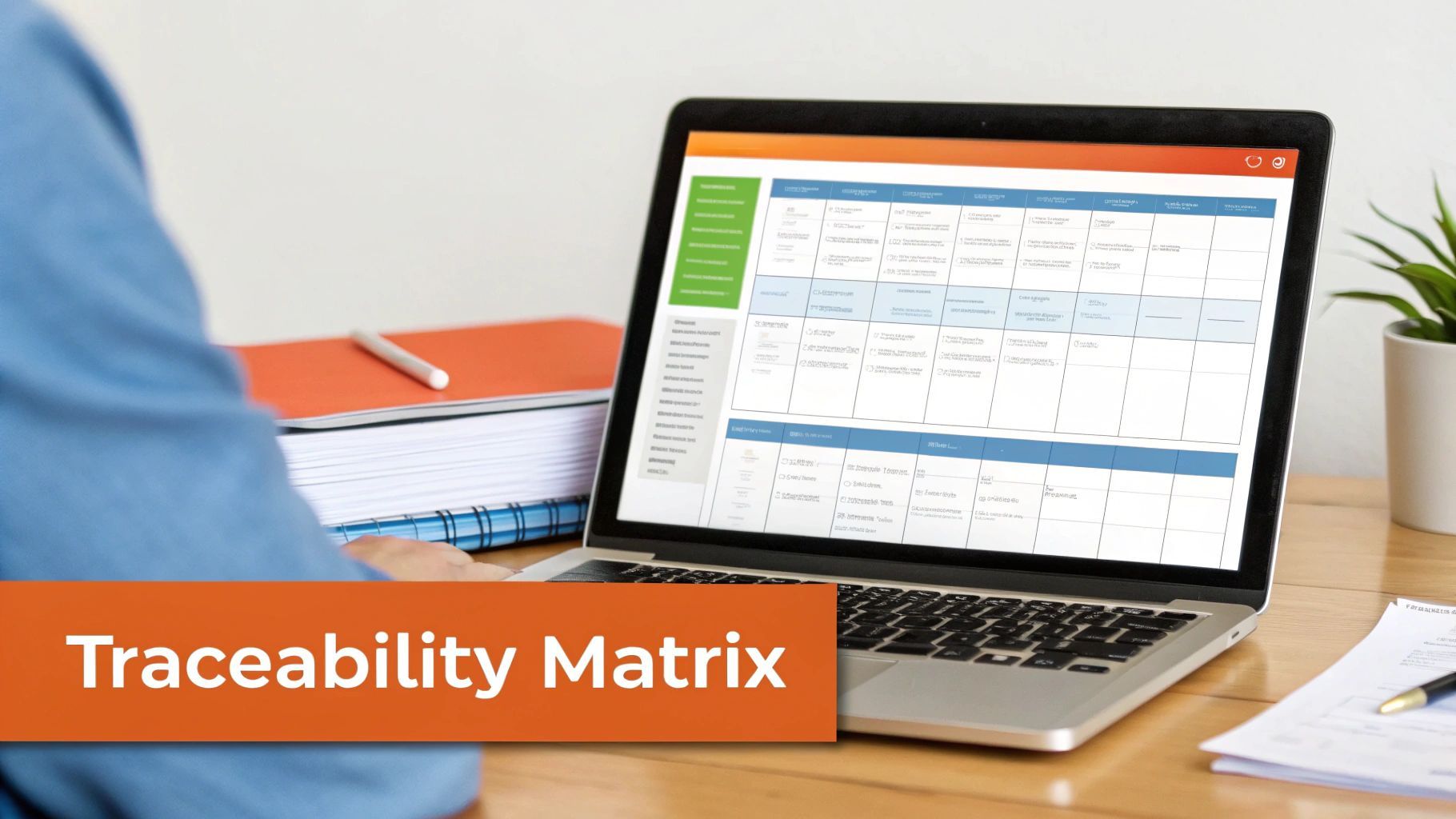
3. Create a Requirements Traceability Matrix (RTM)
A Requirements Traceability Matrix (RTM) is an essential governance tool that maps every single client requirement to the specific section of your proposal that addresses it. This document serves as a master checklist, providing an auditable trail that proves comprehensive compliance and prevents critical requirements from being overlooked.
Key Insight: Share a simplified version of your RTM with the client as part of your submission. This makes the evaluator’s job easier by providing a clear guide to finding your responses, showcasing your thoroughness and professionalism.
Tips
- Create the RTM immediately after RFP review.
- Track compliance status (Met / Partial / Exceeded).
- Automate RTM creation for large, complex RFPs to avoid human error.
4. Write Customer-Centric, Not Product-Centric Content
A common mistake in RFP responses is focusing inwardly on company achievements and product features. Winning proposals shift the perspective entirely, centering every sentence on the customer's problems, goals, and desired outcomes. This customer-first narrative is a crucial element of effective RFP response best practices.
Key Insight: Frame your solution not as a set of features, but as a direct answer to a challenge mentioned in the RFP. If the client states a goal of reducing project delivery time, lead with how your preconstruction process directly accelerates their timeline.
Tips
- Mirror the client’s language and terminology.
- Translate every feature into a client benefit.
- Use “you/your” more than “we/our.”
- Structure sections around client goals.
5. Use Data, Metrics, and Proof Points to Support Claims
Making broad, unsupported claims like “we deliver superior results” is a fast track to the rejection pile. A winning proposal replaces vague assertions with concrete evidence. Backing up every claim with hard data, customer testimonials, relevant case studies, and third-party certifications transforms your bid from a marketing document into a compelling business case. This evidence-based approach builds immense credibility and is a hallmark of sophisticated RFP response best practices.
Key Insight: Quantify everything possible. Instead of "we have a strong safety record," state "Our Total Recordable Incident Rate (TRIR) is 0.52, which is 75% below the industry average." This level of specificity is what sets winning bids apart.
Tips
- Maintain a library of quantified case studies.
- Use metrics like TRIR, EMR, schedule gains, and cost savings.
- Leverage third-party certifications and ROI projections.
6. Tailor Response Format and Structure to RFP Specifications
Adhering to the exact formatting and structural requirements laid out in the RFP is a critical, yet often underestimated, component of a successful bid. This goes beyond content to include specific rules on page limits, fonts, margins, section order, and file naming conventions. Ignoring these instructions signals a lack of attention to detail and can give evaluators an easy reason to disqualify your proposal before they even read its substance. This is a non-negotiable part of RFP response best practices.
Key Insight: Treat the formatting instructions as the very first requirement you must meet. Create a template or style guide based on these rules before anyone starts writing content. This prevents a chaotic and time-consuming reformatting effort right before the deadline.
Tips
- Build a one-page style guide per RFP.
- Allocate page budgets per section.
- Assign a final reviewer focused only on format compliance.
7. Develop a Compelling Executive Summary
The executive summary is often the only section that senior decision-makers read. It’s your proposal's most critical real estate, acting as a powerful first impression that can either capture interest or doom the entire submission to the "no" pile. This concise, high-impact narrative must quickly demonstrate your understanding of the client's problem and present a clear, compelling vision for your solution. Neglecting its importance is a common but fatal flaw in RFP response best practices.
Key Insight: Write the executive summary last. Only after you have fully developed every section of your proposal can you distill its most powerful arguments, benefits, and differentiators into a concise and accurate overview.
Tips
- Lead with the client’s problem.
- Keep it skimmable and under two pages.
- Quantify value and mirror client tone.
8. Demonstrate Clear Differentiation and Competitive Advantage
A compliant proposal gets you in the door, but a differentiated one wins the contract. Successful RFP responses clearly articulate what makes your approach unique and genuinely superior to alternatives. This goes beyond generic marketing claims; it requires you to connect your specific strengths directly to the client's stated priorities and evaluation criteria, proving why you are the lowest-risk, highest-value choice. This is a critical component of effective RFP response best practices.
Key Insight: Your differentiators must be relevant. A cutting-edge project management software is not a differentiator if the client has mandated the use of their own internal system. Align your unique strengths with the client's explicit needs and pain points identified in the RFP.
Tips
- Focus on 3–4 meaningful differentiators.
- Substantiate claims with evidence.
- Weave differentiation throughout the proposal, not just one section.
9. Include Strong Implementation and Project Plans
A compelling solution and competitive price are not enough; buyers need absolute confidence that your team can deliver on its promises. A vague or unrealistic project plan signals inexperience and introduces risk. Including a detailed, well-structured implementation and project plan is a critical RFP response best practice that directly addresses the client's fear of a failed project, demonstrating your firm's execution capability and foresight.
Key Insight: Your project plan is a narrative that proves your competence. Don't just list tasks; explain the "why" behind your timeline, identify the critical path, and show how your risk mitigation strategies protect the project's budget and schedule.
Tips
- Use visual timelines.
- Call out dependencies and mitigation strategies.
- Base schedules on comparable past projects.
10. Obtain Internal Review and Approval Before Submission
Submitting a proposal without a rigorous internal review is like sending a ship to sea with an uninspected hull. A structured review process is a critical quality gate, ensuring your response is accurate, compliant, consistent, and strategically aligned with company objectives. This collaborative audit catches errors, refines messaging, and validates commitments before they reach the client, preventing costly mistakes and reputational damage.
Key Insight: Treat your internal review like a client-side evaluation. Assign reviewers specific roles (e.g., Compliance Checker, Technical Expert, Storytelling Editor) and provide them with the RFP’s scoring criteria to guide their feedback. This simulates the actual evaluation and uncovers weaknesses before submission.
Tips
- Schedule reviews early.
- Run a Red Team review.
- Centralize feedback and enforce version control.
- Secure legal and executive sign-off.
From Best Practices to Competitive Advantage
These RFP response best practices only work if your team has the time to execute them well. The biggest bottleneck remains manual document analysis — clause hunting, compliance mapping, and safety interpretation.
That’s where targeted automation changes the equation.
Solutions like Halozen.AI deliver clause-indexed requirements, JHAs, and submittal registers in under 72 hours, saving 23.5 hours per bid while improving accuracy and audit readiness.
When compliance is automated, teams can:
- Focus on differentiation
- Improve risk analysis and value engineering.
- Strengthen executive narratives
- Submit higher-quality bids — faster.
Stop letting RFPs drain your best talent. Apply these RFP response best practices, remove the manual bottleneck, and turn bidding into a strategic growth engine.
Ready to eliminate the grind? See how Halozen.AI delivers audit-ready compliance packages in under 72 hours. Visit Halozen.AI to learn more.